

The Carpool Group Chat Is Broken: These Apps Actually Make Youth Sports Logistics Easier
Few modern parenting experiences are more chaotic than coordinating transportation for youth sports.
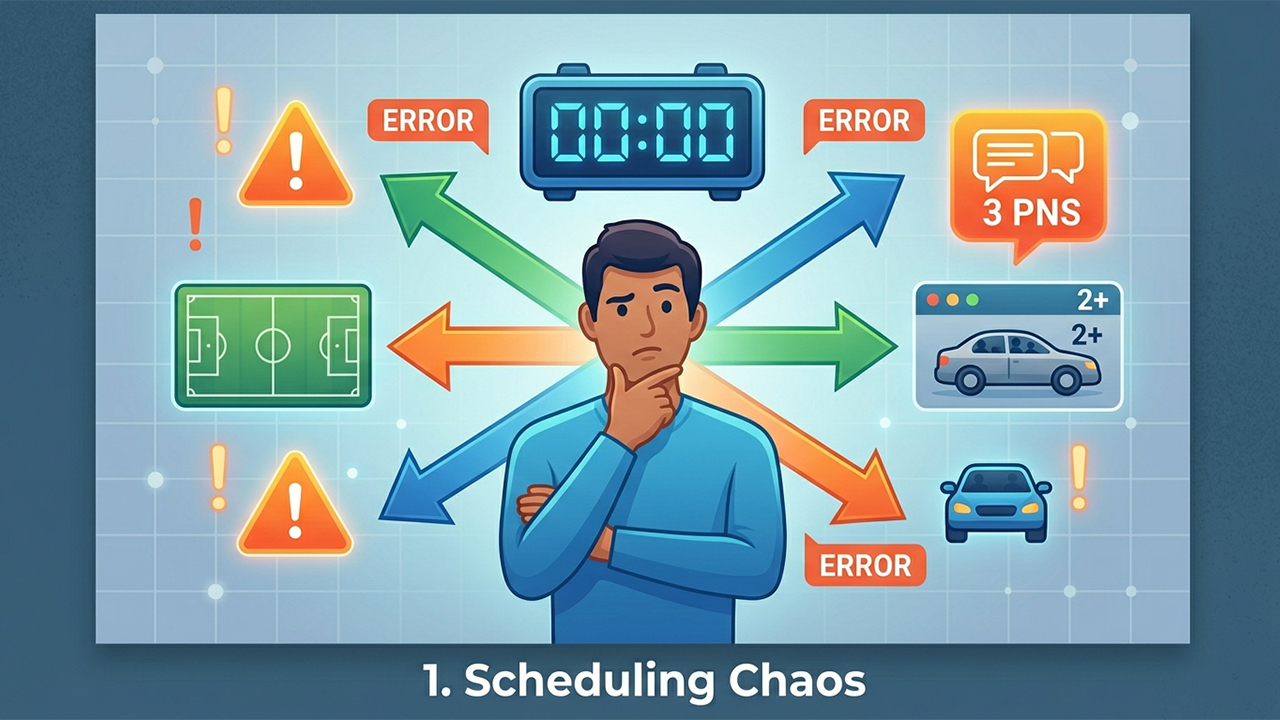
One parent is stuck at work. Another can drive to practice but not home. Someone forgot to reply to the group chat. Half the team is asking where the tournament field actually is. Meanwhile, coaches are sending schedule changes through three different apps and two email chains.
That logistical mess is exactly why sports team coordination apps have become essential for families in 2026.
The best apps do far more than post practice schedules. They handle attendance tracking, ride coordination, calendar syncing, live messaging, reminders, and parent communication in one centralized place. Some even help coaches organize volunteers, collect payments, and manage multiple teams simultaneously.
But after testing the major sports coordination apps currently available on the US Apple App Store and Google Play Store, one thing became very obvious: many apps advertise “team management,” but only a handful genuinely reduce stress for parents managing carpools week after week.
For this guide, the testing focused specifically on youth sports families dealing with real-world transportation coordination.
The evaluation criteria included:
Carpool and scheduling usability
Parent communication tools
RSVP and attendance tracking
Calendar syncing reliability
Ease of use for non-technical parents
Pricing transparency
Overall usefulness during active sports seasons
These were the apps that genuinely stood out.
TeamSnap (iOS & Android)
The Reality Check: Still the Most Complete Option for Youth Sports Families
TeamSnap remains the app most parents have probably already encountered at some point, and after extensive testing, it is easy to understand why it became so dominant in youth sports.
The app combines scheduling, attendance tracking, messaging, roster management, and calendar syncing into one ecosystem that feels purpose-built for chaotic family schedules. During testing, the calendar synchronization worked particularly well. Practices, tournaments, and last-minute field changes updated quickly across devices, which significantly reduced confusion during busy weekends.
The attendance and RSVP system is where TeamSnap becomes especially useful for carpools. Parents can immediately see who is attending, who still needs a ride, and which players may require transportation help.
For coaches managing multiple families, this dramatically cuts down on repetitive texting.
The messaging tools are also strong. Team-wide announcements, subgroup chats, and push notifications all performed reliably during testing.
However, TeamSnap’s biggest weakness is pricing. The free version feels increasingly limited, and many important features — including advanced availability tracking — require paid plans. Several parents and coaches on Reddit specifically complained about ads and upsell prompts appearing too aggressively inside the app.
Paid plans commonly range around $9.99–$15.99 per month per team depending on features and roster size.
Pros
Excellent scheduling and RSVP tools
Strong calendar syncing
Reliable parent communication features
Widely used across youth sports
Great for managing multiple events
Cons
Important features locked behind paid plans
Ads and upsell prompts can become annoying
Costs add up for multiple teams
Spond (iOS & Android)
The Reality Check: The Best Free App for Coordinating Carpools
Spond was one of the biggest surprises during testing.
Unlike many competitors, Spond offers nearly all core team management features completely free, which immediately makes it attractive for volunteer coaches and parent-run youth teams.
The app handles scheduling, RSVPs, messaging, attendance tracking, and payment collection without forcing teams into expensive subscription upgrades.
For carpool coordination specifically, Spond performed extremely well. Event RSVPs are simple, reminders are automatic, and parents can quickly communicate transportation changes without creating massive unread group chats.
One particularly useful feature is that some team information can still be received through email without requiring every parent to fully adopt the app ecosystem. That lowers friction significantly for less tech-comfortable families.
The interface is also noticeably cleaner than some older competitors.
During testing, Spond consistently felt less cluttered and less commercialized than TeamSnap. Several Reddit users specifically praised it for avoiding aggressive ads and keeping communication simple.
The biggest limitation is that Spond is still less universally adopted in the US compared to TeamSnap. Some leagues and clubs simply already operate entirely inside TeamSnap ecosystems.
Pros
Core features are genuinely free
Excellent RSVP and scheduling tools
Cleaner interface than many competitors
Strong communication system
Automatic reminders work well
Cons
Smaller US user base
Fewer third-party integrations
Some leagues may already require TeamSnap

Heja (iOS & Android)
The Reality Check: The Simplest App for Busy Parents
Heja takes a much more lightweight approach compared to larger sports management platforms.
Instead of trying to become a full administrative ecosystem, the app focuses heavily on communication and scheduling simplicity. During testing, this made Heja especially effective for younger kids’ sports teams where parents mainly need clear updates and reliable attendance tracking.
The interface is extremely easy to learn. Parents can quickly respond to events, receive reminders, and communicate without navigating complicated menus.
Several Reddit users specifically praised Heja for having one of the cleanest user experiences among youth sports apps.
The scheduling tools are strong enough for typical practices and games, and the chat functions worked reliably during testing.
However, Heja is intentionally less feature-heavy than TeamSnap or SportsEngine. Larger clubs managing tournaments, registrations, or advanced payment systems may eventually outgrow it.
The free version is usable, though premium upgrades unlock additional team management features.
Pros
Extremely easy to use
Clean, low-friction interface
Strong communication tools
Great for younger youth teams
Less overwhelming for parents
Cons
Fewer advanced management tools
Free version includes ads
Less suitable for large organizations

SportsEngine (iOS & Android)
The Reality Check: Best for Large Clubs and Organized Leagues
SportsEngine approaches youth sports from an organizational perspective rather than a parent-first perspective.
The platform is heavily used by larger sports organizations, leagues, and clubs because it combines registration systems, scheduling, roster management, payments, and communication tools into one large ecosystem.
For carpool coordination specifically, SportsEngine works adequately, but it often feels more administrative than practical.
During testing, the scheduling tools were reliable, and event communication functioned well. But compared directly with Spond or Heja, the experience felt noticeably more complicated for everyday parents simply trying to coordinate rides and attendance.
Pricing is also significantly higher for organizations using premium tools. Some organizational plans reportedly start around $79 per month or more depending on club size.
The app makes the most sense for established clubs already deeply integrated into SportsEngine infrastructure.
Pros
Strong league-wide management tools
Reliable scheduling system
Excellent for large organizations
Integrated registration and payment features
Widely recognized in youth sports
Cons
Overkill for smaller teams
Interface feels more administrative
Expensive for advanced organizational use
TeamReach (iOS & Android)
The Reality Check: The Best Lightweight Free Alternative
TeamReach is far simpler than many competitors, but that simplicity is exactly why some parents and coaches prefer it.
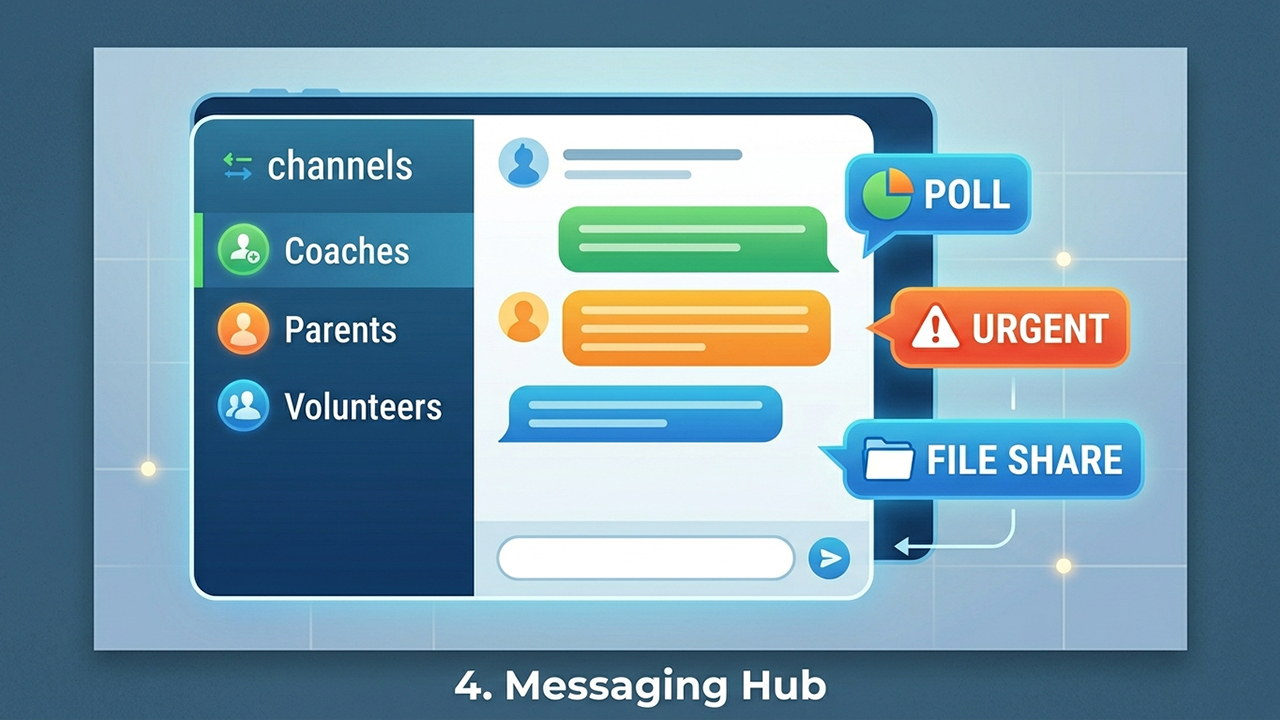
The app focuses primarily on communication, scheduling, and attendance tracking without overwhelming users with advanced league-management features.
One especially useful advantage is that TeamReach does not require traditional account creation for every participant. Teams can simply share an access code, which makes onboarding much easier for large groups of parents.
During testing, the calendar and RSVP features worked reliably, and communication felt refreshingly straightforward.
However, TeamReach lacks many of the advanced tools offered by TeamSnap or SportsEngine. There are fewer integrations, fewer customization options, and less automation overall.
Still, for smaller community teams simply trying to organize rides, practices, and schedules efficiently, the app works surprisingly well.
Pros
Free and easy to join
Very lightweight setup
Good scheduling basics
Simple RSVP system
Low-friction onboarding
Cons
Limited advanced features
Less polished than larger competitors
Better for small teams than large clubs

The Final Verdict
For families specifically trying to coordinate carpools, schedules, and communication around youth sports, Spond stands out as the strongest overall choice in 2026.
It delivered the best balance of scheduling tools, communication features, attendance tracking, ease of use, and pricing during testing. Most importantly, it genuinely reduced organizational chaos without aggressively pushing parents into expensive subscriptions.
That said, the best app still depends on the type of team environment involved:
Choose Spond for the best overall free carpool coordination experience.
Choose TeamSnap for the most complete youth sports ecosystem.
Choose Heja for the simplest parent-friendly communication experience.
Choose SportsEngine for large clubs and leagues.
Choose TeamReach for lightweight community teams.
The biggest lesson from testing these apps is that youth sports logistics are rarely just about schedules. The best apps quietly reduce stress for parents, coaches, and kids alike — and during a busy sports season, that matters far more than flashy features ever will.