

Stop Overpaying at the Pump: 3 Smart Apps to Outsmart Gas Prices on Your Commute
For most commuters, fuel is one of those recurring expenses that quietly eats away at a monthly budget. A difference of just a few cents per gallon may not seem significant during a single fill-up, but over months of weekday driving, those savings add up fast. The problem is convenience: many drivers simply stop at the first station they see, even when a cheaper option may be only a few minutes farther along the route.
To determine which apps genuinely help drivers save money without adding unnecessary hassle, several widely used fuel-tracking and navigation platforms were evaluated based on three factors that matter during a real commute: route-based station discovery, price accuracy, and ease of use while driving. Some apps focus on live community pricing, others prioritize cashback rewards, and a few attempt to reduce fuel consumption altogether.
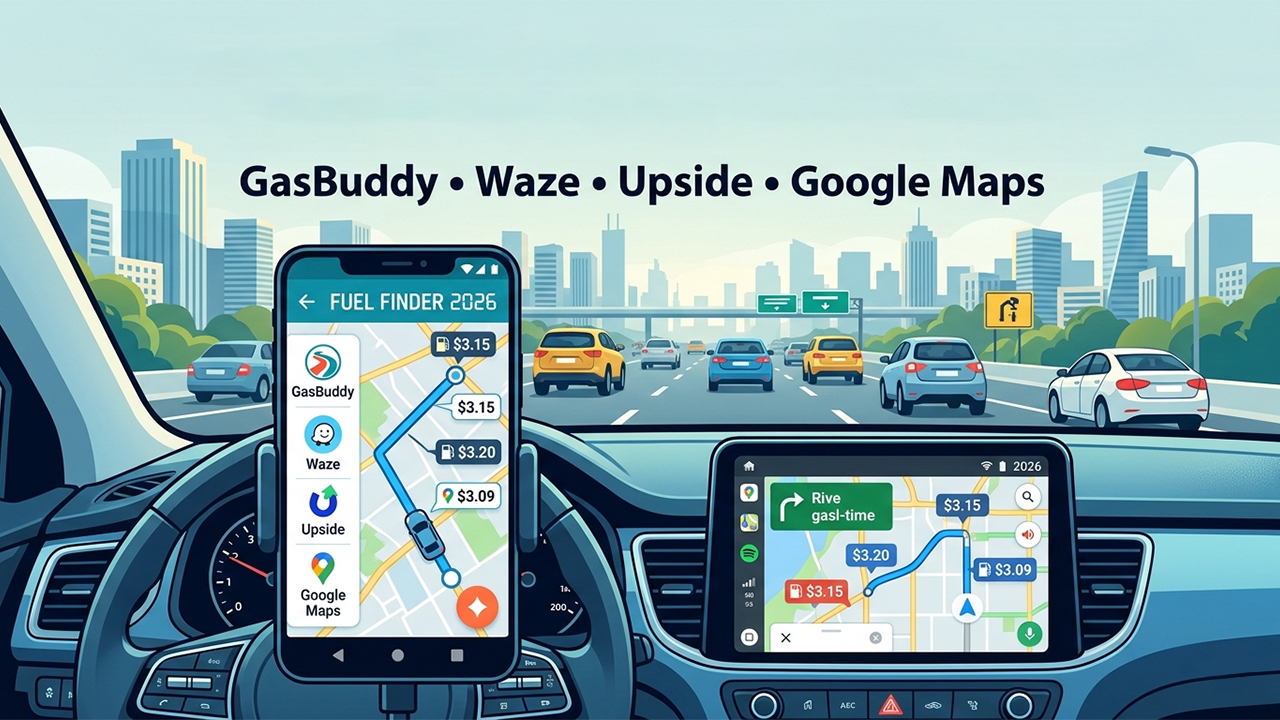
Here are the three apps that stand out in 2026 for finding cheaper gas during a daily commute.
1. GasBuddy (iOS)
Pricing
Free, with optional premium memberships
What It Does Best
Among fuel-saving apps, GasBuddy still offers the largest and most reliable crowdsourced price database. Its biggest advantage for commuters is the “Find Gas Along Route” feature, which helps drivers compare prices without making major detours.
Instead of only showing nearby stations, the app overlays fuel prices directly along a planned route. In busy metro areas and suburbs, pricing updates are often extremely recent because millions of users regularly submit station data.
GasBuddy also includes the optional “Pay with GasBuddy” card, which links to a checking account and provides an automatic discount per gallon at participating stations. Combined with temporary station promotions, the savings can become substantial for high-mileage commuters.
Pros
Excellent route-based gas search tools
Frequently updated price data in urban and suburban areas
Optional payment card adds automatic fuel discounts
Strong nationwide station coverage
Cons
Interface can feel cluttered with ads and promotions
Background location tracking may affect battery life
Smaller towns occasionally have outdated pricing data
2. Waze
OS Availability
Pricing
Free
What It Does Best
Waze works especially well for commuters who want fuel pricing integrated directly into navigation rather than managed through a separate app.
While actively navigating, drivers can search for nearby gas stations and sort them by price, distance, or brand. The key advantage is convenience: Waze immediately calculates how much extra time a stop will add to the commute and reroutes automatically afterward.
Because the platform already excels at live traffic reporting, accident alerts, and congestion avoidance, the fuel-search function feels naturally integrated into the drive instead of becoming another task to manage before leaving home.
For commuters using Apple CarPlay or Android Auto, Waze is particularly practical because fuel prices appear directly on the in-dash display.
Pros
Excellent integration with live navigation
Calculates detour time automatically
Strong CarPlay and Android Auto support
Combines traffic avoidance with fuel savings
Cons
Fuel prices depend heavily on user updates
Rural pricing data may be inconsistent
No built-in cashback or rewards program
3. Google Maps
OS Availability
Pricing
Free
What It Does Best
Google Maps is the simplest option because most drivers already use it daily. Fuel prices appear directly on the map when searching for gas stations along a route, eliminating the need to install another dedicated app.
Although Google Maps does not update prices as aggressively as GasBuddy in every market, its broader strength lies in efficiency-focused routing. The platform’s eco-routing system analyzes traffic flow, elevation, stop frequency, and vehicle type to recommend routes that may reduce overall fuel consumption.
In practice, avoiding heavy stop-and-go congestion often saves more fuel than driving several extra miles to reach a slightly cheaper station.
The clean interface is another major advantage. Unlike many fuel-focused apps, Google Maps avoids excessive ads, popups, and reward prompts.
Pros
Extremely easy to use
Built into a familiar navigation platform
Eco-routing can reduce total fuel usage
Clean, distraction-free interface
Cons
Less detailed fuel filtering than dedicated gas apps
Premium and diesel pricing require extra taps
No rewards, cashback, or payment discounts
Final Verdict
For drivers focused purely on maximizing fuel savings, GasBuddy remains the strongest dedicated gas-price app thanks to its massive crowdsourced database and route-planning tools.
However, for the average commuter balancing convenience, navigation, and real-time decision-making, Waze offers the best overall experience.
Instead of forcing drivers to juggle multiple apps during a busy morning commute, Waze integrates fuel pricing directly into live navigation. It quickly shows whether a cheaper station is actually worth the detour, calculates the time impact automatically, and keeps the route optimized around traffic conditions.
For most daily commuters, that balance between simplicity, safety, and practical savings makes Waze the most useful all-around choice in 2026.