

From Camera Roll to Mailbox: The Best Apps for Sending Real Postcards in 2026
Text messages disappear in seconds. Instagram stories vanish in a day. But a real postcard still ends up on refrigerators, desks, and memory boxes.
That’s exactly why postcard apps have quietly become one of the most useful travel and photo-sharing categories on smartphones. Instead of printing photos manually, buying stamps, and hunting for a mailbox while traveling, these apps let users turn phone photos into physical postcards that are printed and mailed automatically.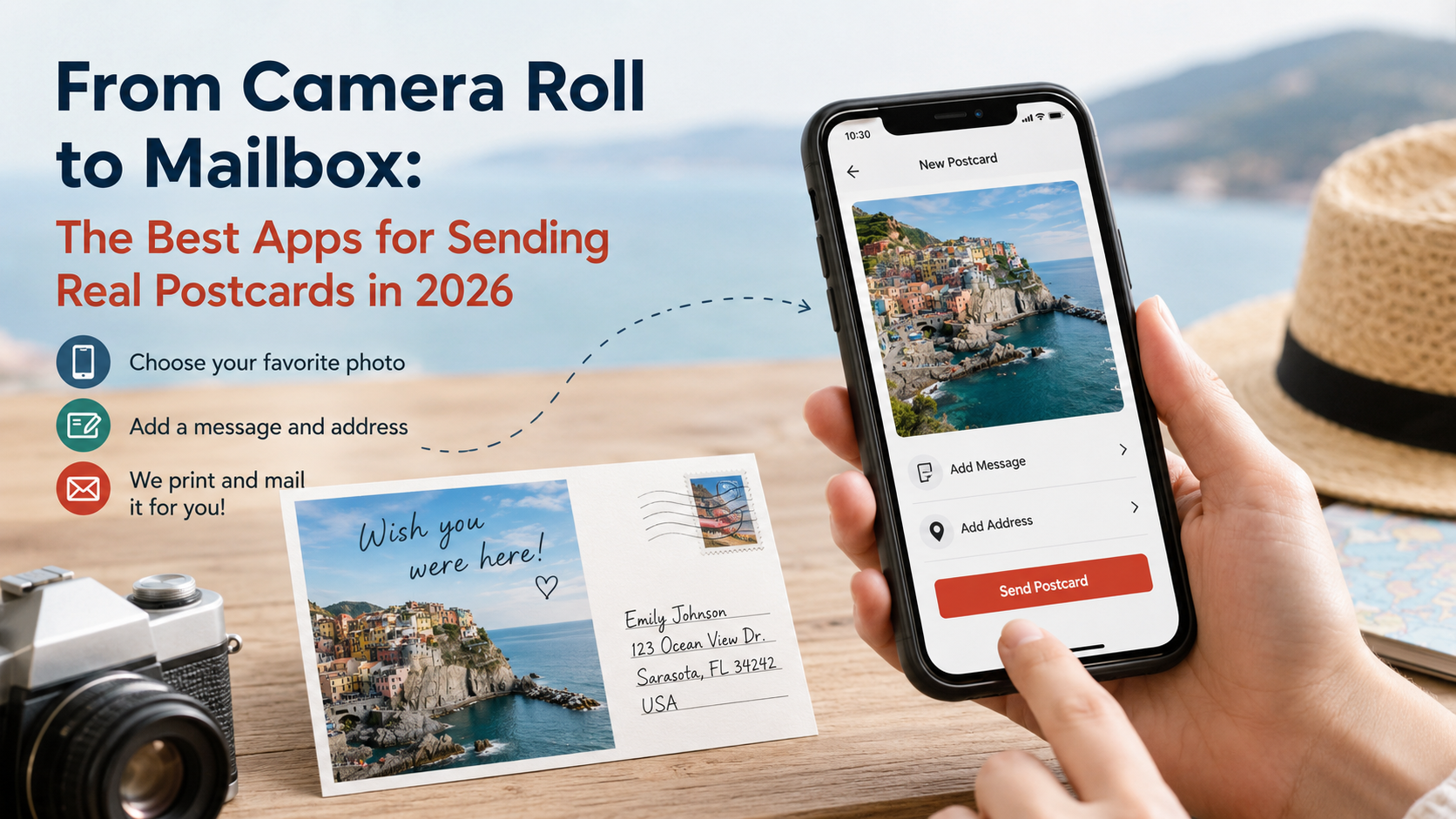
But after testing the major postcard mailing apps currently available in the US App Store and Google Play Store, one thing became obvious very quickly: convenience matters, but print quality, delivery reliability, and pricing matter even more.
Some apps felt polished but expensive. Others were affordable but surprisingly clunky. A few genuinely made sending postcards easier than posting on social media.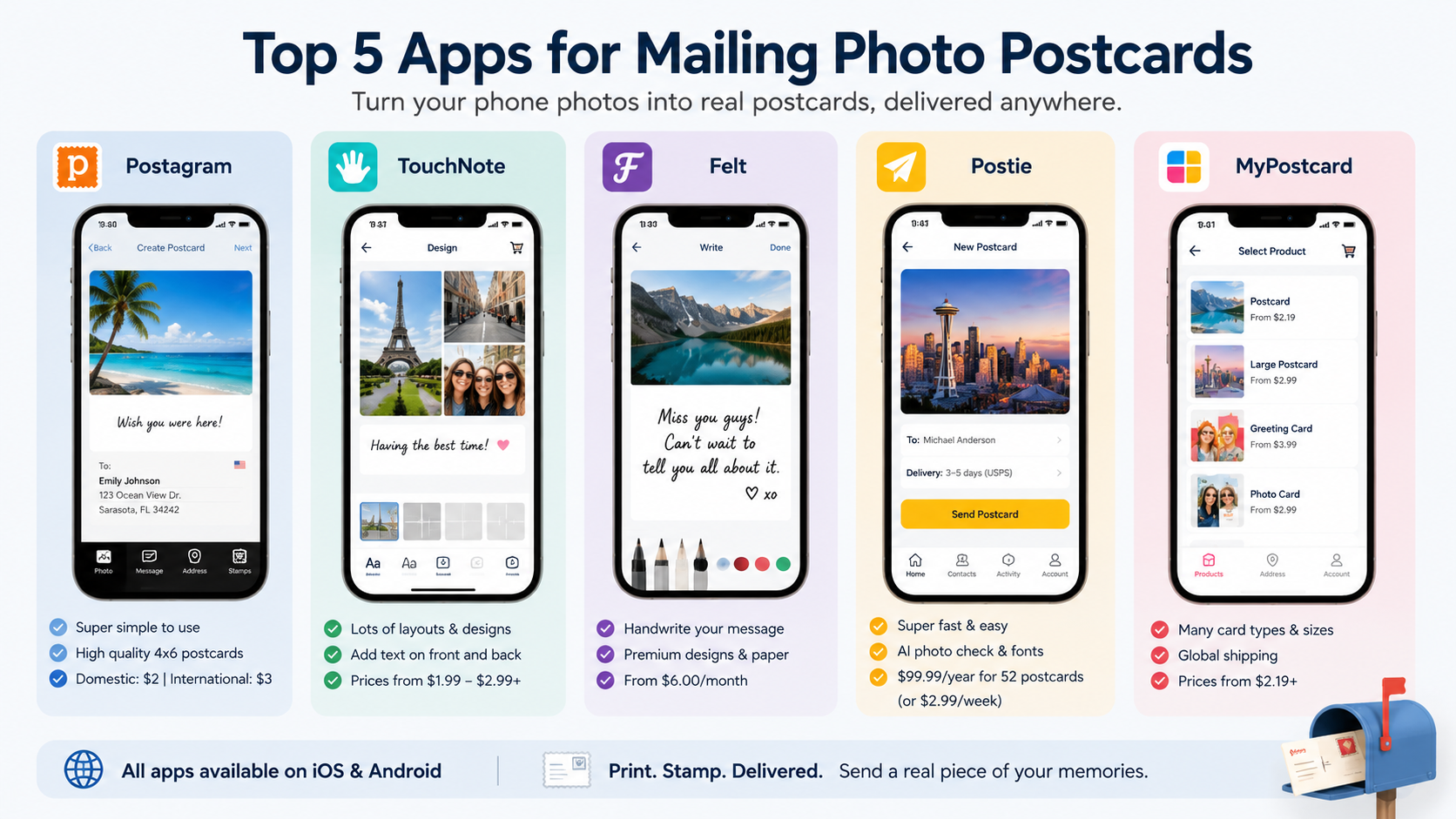
For this guide, the testing focused on:
Ease of creating postcards from phone photos
Print quality and customization
Delivery speed and reliability
International mailing support
Overall user experience
Pricing transparency
These were the apps that actually stood out in real-world testing.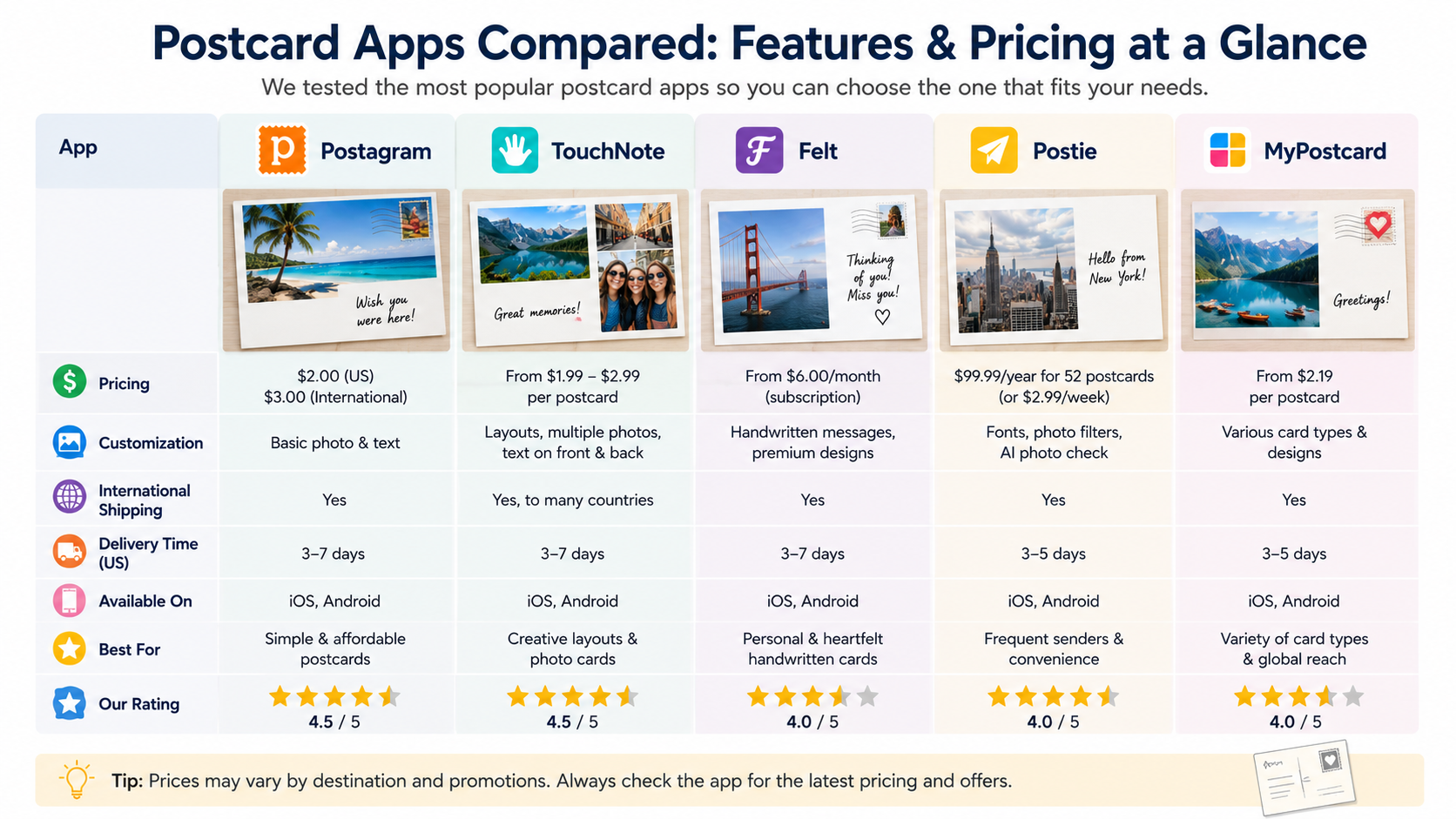
Postagram (iOS & Android)
The Reality Check: Still the Simplest Postcard App for Most People
Postagram has existed for years, but surprisingly, it still delivers one of the smoothest overall experiences in this category.
The app’s biggest strength is simplicity. Users can select a photo directly from their camera roll, type a message, enter an address, and send a postcard in just a few minutes. During testing, the process consistently felt faster and less complicated than most competitors.
The postcard quality was also genuinely impressive. Cards are printed on glossy 4x6 cardstock at 300dpi resolution, and photo reproduction looked sharp even with casual smartphone photos.
Pricing remains refreshingly straightforward. Domestic US postcards cost around $2 each, including postage, while international cards are approximately $3.
The biggest downside is that the app feels slightly dated compared to newer competitors. The interface works well, but visually, it hasn’t evolved much.
Pros
Extremely easy to use
Affordable pricing
Strong print quality
Fast postcard creation process
Available on both iPhone and Android
Cons
Interface feels somewhat outdated
Limited design flexibility
Fewer premium customization tools
TouchNote (iOS & Android)
The Reality Check: The Best Balance Between Design and Convenience
TouchNote feels more modern and polished than many postcard apps currently available.
During testing, the app stood out for its layout customization tools. Users can create multi-photo postcards, add captions to the front, and choose from multiple templates without the editing process becoming overwhelming.
The overall user experience is extremely smooth. Image cropping, photo positioning, and text editing all felt responsive and intuitive, especially compared to older competitors.
Print quality was consistently good, and delivery times within the US were generally reliable during testing. The app also supports international delivery to a large number of countries.
However, pricing is noticeably higher than simpler apps like Postagram. Depending on destination and card style, postcards usually cost between roughly $1.99 and $2.99, while greeting card options cost significantly more.
TouchNote also pushes upgrades and add-ons fairly aggressively throughout the ordering process.
Pros
Modern, polished interface
Excellent layout customization
Reliable international shipping
Strong print quality
Supports multi-photo postcards
Cons
More expensive than some competitors
Frequent upsell prompts
Customization can occasionally feel excessive
Felt (iOS & Android)
The Reality Check: The Most Personal Experience
Felt approaches postcards differently from most competitors.
Instead of feeling like a quick photo-printing service, Felt focuses heavily on personalization. The app allows users to handwrite messages directly on the screen using a finger or stylus, which genuinely makes postcards feel more personal and less automated.
When tested with travel photos, the handwriting feature immediately made the final product feel more thoughtful than standard typed postcards. The app also supports multi-panel photo cards and higher-end designs that feel closer to boutique stationery than generic postcards.
That said, Felt is not the cheapest option. Subscription pricing starts around $6 per month for limited card allowances, with additional premium options available.
The app is best suited for users who care more about emotional impact and presentation than sending large volumes of postcards cheaply.
Pros
Handwritten messages feel genuinely personal
Beautiful premium card designs
Excellent customization tools
High-quality finished products
Strong emotional appeal
Cons
More expensive than most competitors
Slower workflow than simpler apps
Better for occasional use than bulk sending
Postie (iOS & Android)
The Reality Check: The Most Modern Subscription-Based Option
Postie is one of the newer postcard apps tested, and it feels very different from older postcard platforms.
The app is designed around recurring postcard sending rather than occasional vacation mail. Users choose photos from their phone, write a short message, and Postie handles printing and USPS delivery automatically. According to the company, postcards typically arrive within 3–5 days.
The standout feature is speed. During testing, sending a postcard genuinely took under a minute once addresses were saved.
The app also includes AI-assisted photo scoring and multiple handwriting-style fonts, which help postcards look more polished without requiring much effort.
However, the subscription pricing model will not appeal to everyone. Postie primarily operates through a yearly subscription costing around $99.99 annually for 52 postcards, or weekly subscription options around $2.99.
For frequent postcard senders, the pricing can make sense. For occasional travelers, it may feel excessive.
Pros
Extremely fast sending process
Clean modern interface
High-quality cardstock
Good recurring-use experience
Strong address book management
Cons
Subscription model won’t suit casual users
Less flexible for one-off postcards
Smaller feature ecosystem than older competitors
The Final Verdict
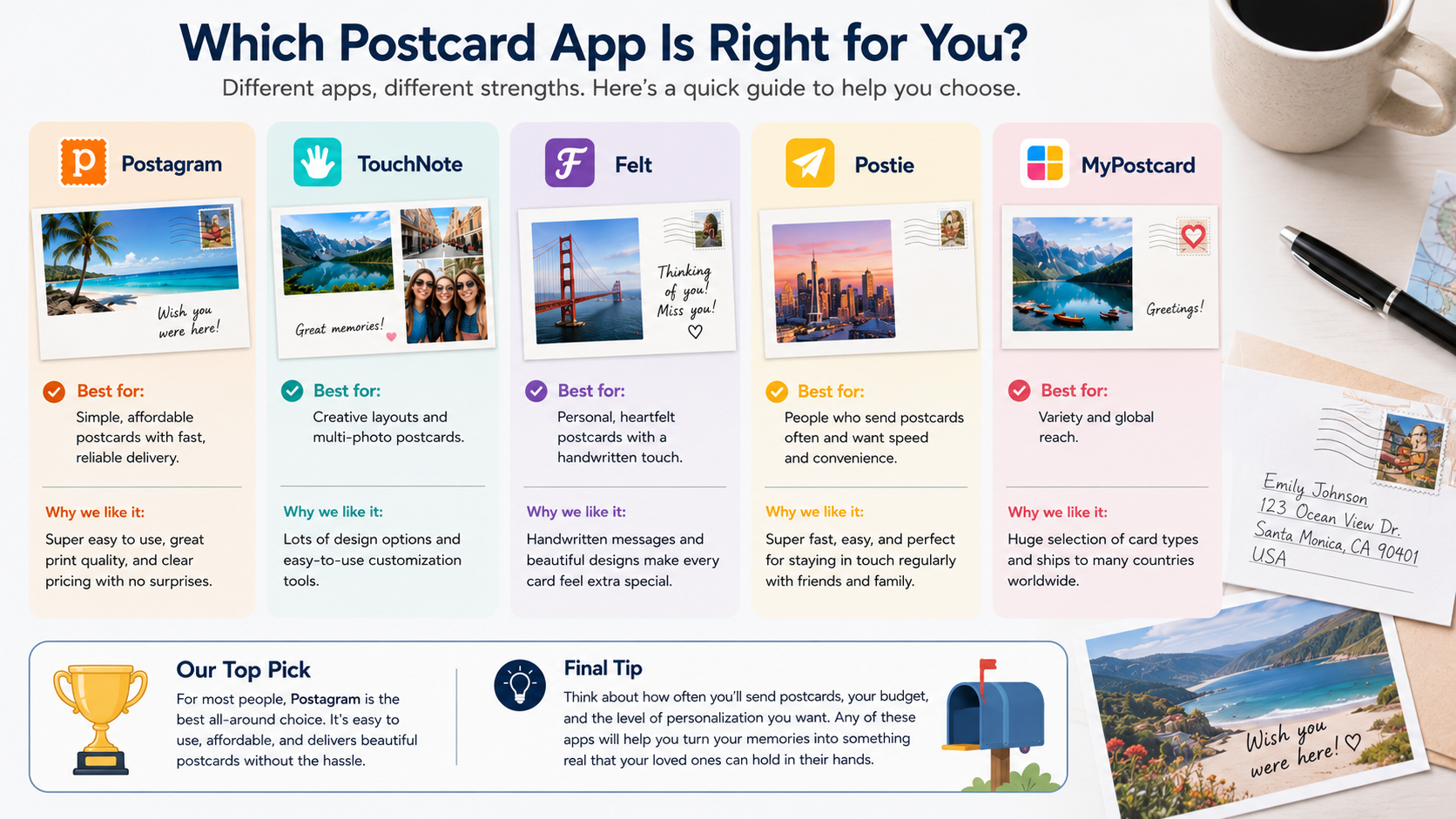
For most people looking to send physical postcards directly from smartphone photos, Postagram remains the best overall choice in 2026.
It consistently delivered the best balance of affordability, simplicity, print quality, and ease of use during testing. The app avoids overcomplicating the experience, which is exactly what makes it work so well.
That said, the best app still depends on the type of postcard experience users actually want:
Choose Postagram for the simplest and most affordable overall experience.
Choose TouchNote for modern layouts and polished design customization.
Choose Felt for the most personal, handwritten postcard experience.
Choose Postie for fast recurring postcard sending and subscription convenience.
The biggest surprise during testing was how emotionally effective physical postcards still feel compared to digital sharing. Even in 2026, a real postcard arriving in someone’s mailbox simply carries more weight than another social media upload ever will.