

Beyond the Mainstream: The Best Apps to Discover Underground Indie Gigs Near You
Nothing beats stumbling into a cramped basement venue and realizing, halfway through the first set, that you’re watching a band people will obsess over a year from now. No giant LED screens. No $180 nosebleed tickets. Just sweat, distortion, cheap drinks, and a crowd that actually came for the music.
Search for live music online and you’ll usually get flooded with the same polished arena tours and heavily promoted festivals. Meanwhile, the really interesting stuff — warehouse gigs, indie label showcases, DIY punk nights, secret electronic sets above a bar you’ve walked past a hundred times — gets buried under algorithms and resale sites. Relying on random Instagram stories or faded flyers taped to café windows only gets you so far.
If you actually care about local music, your phone needs something better than a generic ticket app. The best gig-finder apps do more than list concerts. They learn your taste. They track tiny venue calendars. They alert you when a band you streamed six months ago suddenly announces a Tuesday-night set three miles away. And ideally? They let you buy tickets without getting ambushed by ridiculous fees at checkout.
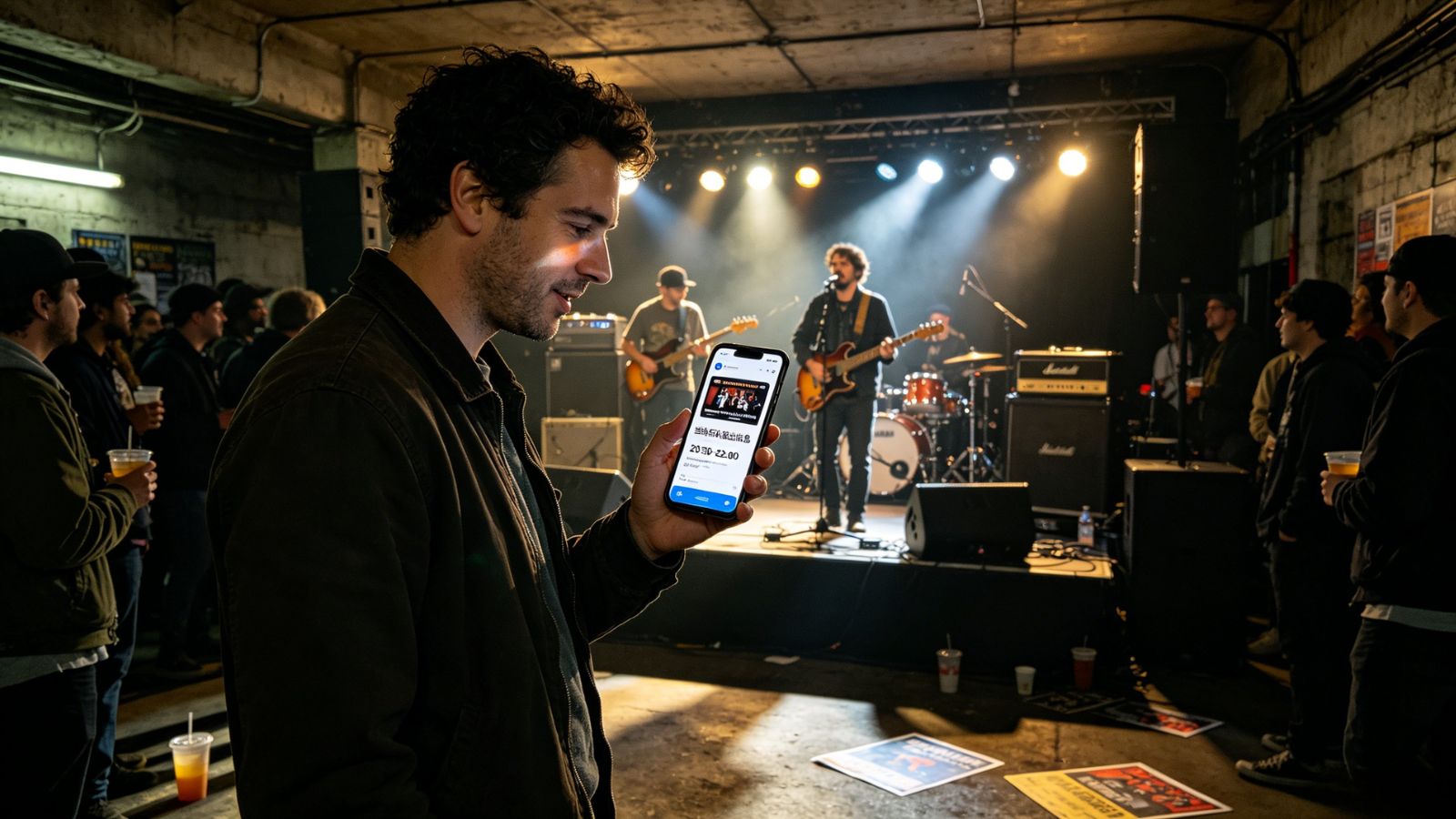
After digging through the biggest music discovery apps across iOS and Android, a few names consistently stood out. Some were better at underground curation. Others excelled at real-time updates or artist tracking. A couple looked great but missed too many local shows to matter. These five apps delivered the strongest overall experience for people who care more about discovering scenes than attending sponsored mega-events.
Bandsintown Concerts (iOS, Android)
Bandsintown feels less like a cool underground secret and more like the central nervous system of live music. It tracks nearly everything. Major tours, tiny club dates, regional festivals, surprise pop-ups — if an artist has any digital footprint at all, there’s a good chance Bandsintown catches it.
The app’s biggest strength is how aggressively it syncs with your listening habits. Connect Spotify, Apple Music, or Last.fm, and within minutes it builds a profile around what you actually listen to instead of what’s trending. That means you’ll randomly get alerts for artists you forgot you even liked. Sometimes that turns into discovering they’re playing a 150-cap venue down the street tomorrow night.
And honestly, that’s where Bandsintown shines: passive discovery. You don’t always have to hunt. The app does a lot of the work for you.
The app itself is free, with revenue coming from ticket partnerships and light advertising.
What works well
Excellent music library syncing
Huge event database covering both mainstream and indie acts
Easy city-switching for travelers
Useful social features that show which shows your friends are attending
Where it falls short
Big commercial shows often clutter the feed alongside smaller local gigs
Ticket links sometimes bounce you to third-party sellers with inflated fees
Dice (iOS, Android)
Dice understands modern indie music culture better than almost anyone else right now.
Instead of trying to be everything for everyone, it focuses heavily on underground venues, curated nightlife, electronic music, indie rock, and emerging artists. The result feels intentional. Open the app and you’re not drowning in corporate tour ads or casino amphitheater shows. You’re seeing the kinds of events people actually brag about discovering early.
But the real reason people love Dice? The anti-scalping system.
Tickets stay locked inside the app as dynamic QR codes that activate close to showtime. If an event sells out, users can return tickets directly into an official waitlist where someone else buys them at face value. No sketchy resale marketplaces. No “processing fee” turning a $30 ticket into $94.
That alone fixes one of the most frustrating parts of live music today.
Dice is free to browse, and pricing is refreshingly transparent. Usually, what you see upfront is what you actually pay.
What works well
Exceptional curation for underground venues and independent artists
Brilliant waitlist system for sold-out shows
Sleek interface that feels modern without trying too hard
Transparent ticket pricing
Where it falls short
Coverage depends heavily on partner venues
Your phone becomes essential since tickets live inside the app
Songkick Concerts (iOS, Android)
Songkick is for people who don’t want fluff.
No endless autoplay videos. No chaotic social feed pretending to be TikTok. No over-designed nonsense. You open the app, and it tells you who’s playing, where they’re playing, and when doors open. Done.
That simplicity turns out to be incredibly useful.
The app functions almost like a clean digital bulletin board for your city’s music scene. Scroll for thirty seconds and you can map out an entire weekend. It’s especially good if you already know what you like and just want a reliable way to track artists and venue schedules without distractions.
Like Bandsintown, Songkick syncs nicely with Spotify and local music libraries. It also keeps a surprisingly satisfying archive of past concerts you’ve attended, which becomes a nice little time capsule after a few years.
Best part? It’s completely free.
What works well
Clean, fast interface
Great Spotify integration
Excellent for quick local event planning
Strong historical tracking for past shows
Where it falls short
Smaller DIY gigs sometimes never make it into the system
Discovery tools feel limited if you’re trying to explore entirely new scenes
Resident Advisor (iOS, Android)
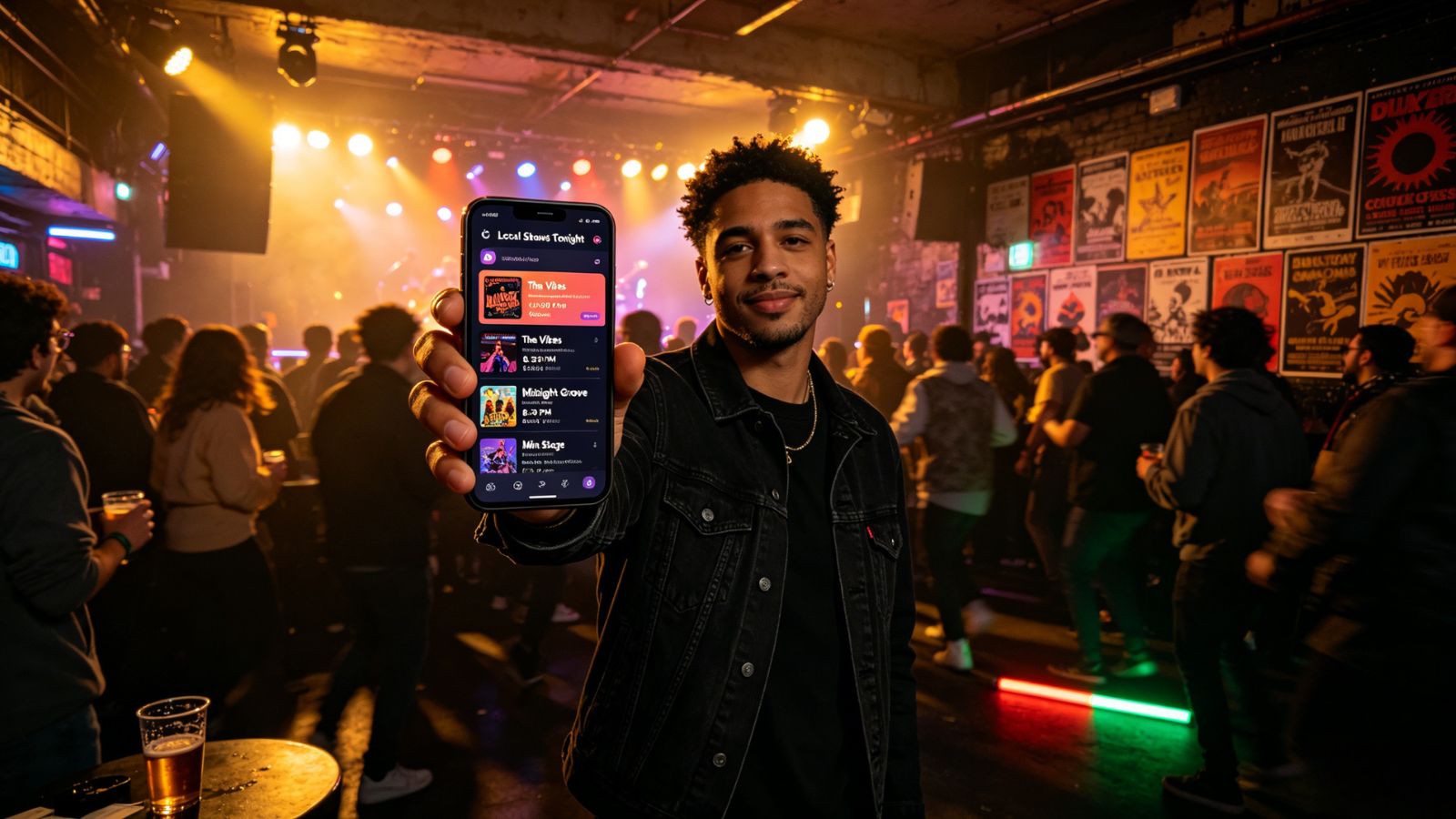
If your weekends involve warehouse parties, ambient listening sessions, underground techno, or DJs playing until sunrise, Resident Advisor is essential.
RA doesn’t really care about mainstream entertainment, and that’s exactly why people trust it.
The platform has spent years building deep relationships with independent promoters, electronic collectives, experimental venues, and niche club communities around the world. That means it catches events most mainstream apps completely miss. Tiny record-store sets. Secret after-hours parties. Experimental noise performances in spaces that technically shouldn’t even be hosting events.
For electronic music fans, it’s unmatched.
The app also goes far beyond simple listings. Venue profiles include details serious music nerds genuinely appreciate — sound systems, promoter histories, event notes, accessibility info, even editorial coverage tied to artists or scenes.
The app itself is free, though ticket purchases include standard processing fees.
What works well
Incredible coverage of underground electronic music culture
Deep venue and promoter information
Strong editorial content and music journalism
Excellent global reach
Where it falls short
Almost useless for traditional indie rock or folk scenes
Interface takes a little patience to learn
Edmtrain (iOS, Android)
Edmtrain feels less polished than some of the others on this list, but that’s part of its appeal. It’s fast, lightweight, and weirdly effective.
The app focuses heavily on EDM, bass music, club culture, and touring DJ circuits across North America. What makes it stand out is how quickly events get updated. Electronic music schedules change constantly — surprise guests appear, openers shift, venues move, afterparties pop up at midnight — and Edmtrain handles that chaos better than most competitors.
Part of that comes from its crowd-sourced approach. Promoters and users both contribute updates, which gives the app a more real-time feel than polished corporate platforms.
It’s free with ads, though there’s a low-cost upgrade if you want a cleaner experience.
What works well
Extremely fast event updates
Useful genre filtering for electronic subgenres
Runs smoothly even on older phones
Straightforward navigation
Where it falls short
Visual design feels dated
Not useful if your taste leans toward rock, folk, or live bands
The Bottom Line
If you want one app that best captures the spirit of modern independent live music culture, Dice comes closest.
Bandsintown has the largest reach. Resident Advisor dominates underground electronic scenes. Songkick is excellent for clean, no-frills tracking. Edmtrain thrives on real-time club updates.
But Dice nails the balance.
It feels curated without being pretentious. It champions independent venues instead of burying them beneath corporate tours. And its face-value ticket system solves a problem nearly every live music fan has dealt with at some point: scalpers turning small shows into overpriced chaos.
More importantly, it actually encourages discovery. The app makes you want to go out. To take a chance on a band you’ve never heard before. To end up in a tiny room somewhere at 1 a.m. thinking, “How are these people not huge yet?”
That’s the whole point of local music in the first place.