

Zero-Based Budgeting Apps That Actually Make the Envelope Method Easier in 2026
Why Digital Envelope Budgeting Still Works
For years, the traditional cash envelope system was one of the simplest ways to stop overspending: put grocery money in one envelope, gas money in another, and once the envelope was empty, spending stopped. The problem is that modern life rarely runs on cash anymore.
Debit cards, Buy Now Pay Later services, subscription creep, and multiple credit cards make physical envelopes feel outdated fast. That is exactly why digital envelope budgeting apps have exploded in popularity over the last few years.
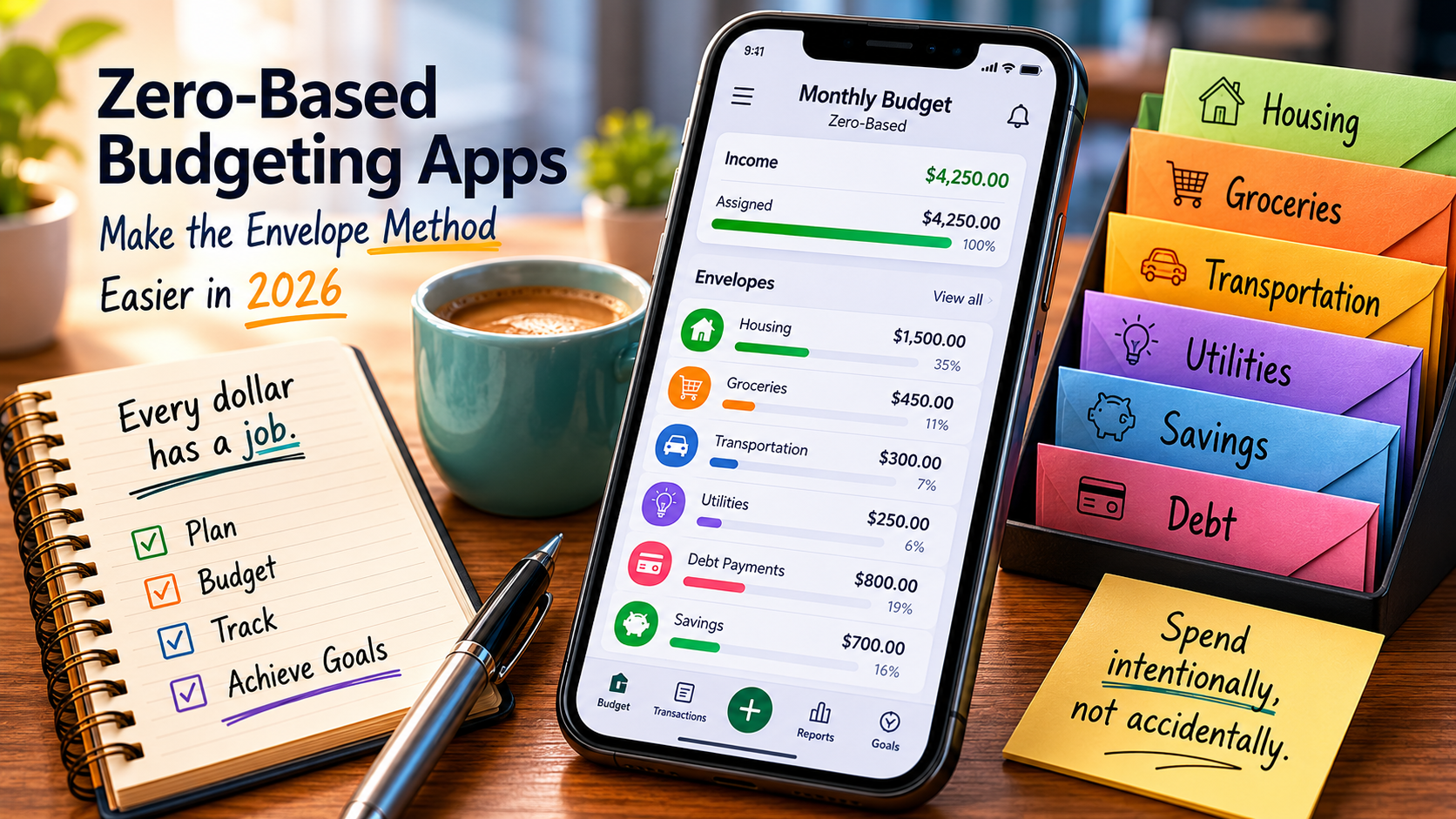
To find out which apps genuinely help users stick to zero-based budgeting—not just track spending after the damage is already done—several leading budgeting platforms were tested across iPhone and android devices. The testing focused on real-world usability: how fast it takes to build a budget, whether the envelope system feels intuitive, how well syncing works, and whether the subscription price actually delivers enough value.
Some apps looked beautiful but became frustrating after a week. Others felt old-school but quietly delivered the best budgeting discipline. A few stood out immediately.
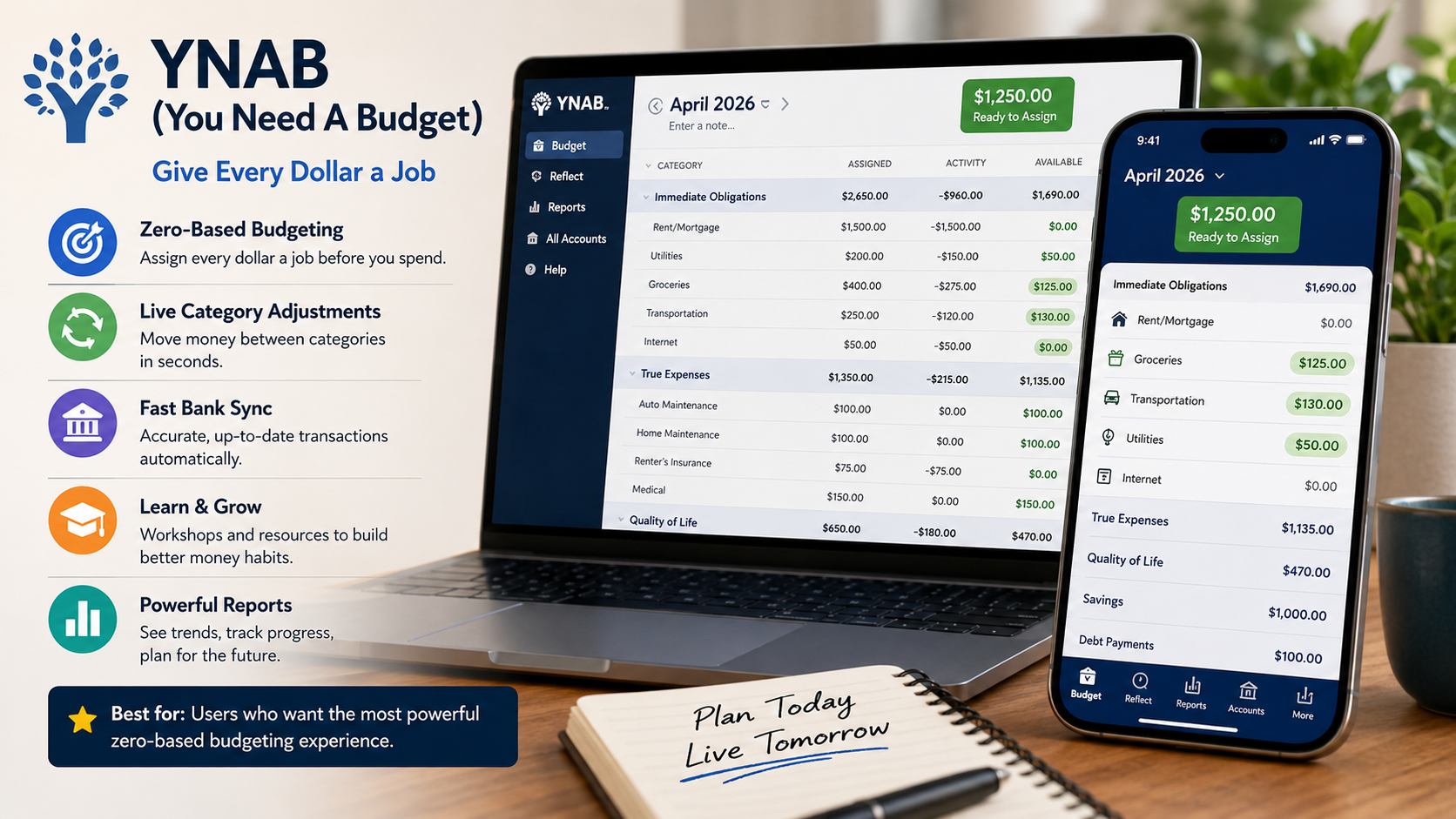
YNAB (You Need A Budget)
Availability: App Store, Google Play
Pricing: 34-day free trial, then approximately $14.99/month or $109/year.
YNAB remains the heavyweight champion of zero-based budgeting apps, even if its pricing continues to spark debate online.
The Reality Check
What actually works is YNAB’s “Give Every Dollar a Job” workflow. During testing, the app forced intentional decisions before spending happened. Instead of checking what was already spent at the end of the month, users assign incoming money into categories immediately.
That subtle psychological difference matters more than most budgeting apps admit.
The live category adjustments are also excellent. When overspending occurred in dining or shopping, moving money between envelopes took seconds, which made the budget feel flexible rather than punishing.
Bank syncing was fast and accurate during testing, and the desktop/mobile combination still feels more polished than most competitors.
The downside? YNAB demands commitment. Missing a week of transaction reviews can make reconciliation feel overwhelming for beginners. Even longtime users frequently complain about the learning curve and rising subscription cost.
Pros & Cons
Pros:
* Extremely powerful zero-based budgeting engine
* Fast bank syncing and reliable transaction imports
* Excellent educational tools and budgeting workshops
* Great reporting for long-term spending analysis
* Works exceptionally well for debt payoff planning
Cons:
* Expensive compared to competitors
* Steeper learning curve than casual users may want
* Requires consistent engagement to work properly
---
Goodbudget
Availability: App Store, Google Play
Pricing: Free tier available; premium costs roughly $10/month or $80/year.
Goodbudget feels like the closest thing to the classic envelope system recreated digitally.
The Reality Check
Unlike YNAB, Goodbudget intentionally stays simple. During testing, that simplicity became its biggest advantage.
Instead of overwhelming dashboards and investment tracking, the app focuses almost entirely on envelope allocations. Users create spending envelopes, assign money, and manually log transactions.
That manual entry sounds inconvenient initially, but it ended up creating far more spending awareness than automatic syncing apps. Entering purchases manually forced closer attention to daily habits.
The shared household budgeting system also worked surprisingly well. Syncing envelope balances between devices made it easy for couples to stay aligned without constant texting about spending.
However, users wanting automation may find the experience dated. Goodbudget lacks the deep analytics and automatic financial aggregation found in more premium competitors.
Pros & Cons
Pros:
* Excellent digital version of the classic envelope method
* Free version is genuinely usable
* Great for couples and shared household budgets
* Simple interface with minimal clutter
* Manual entry encourages spending awareness
Cons:
* Limited automation on the free tier
* Reporting tools feel basic
* Fewer advanced forecasting features
* Interface looks less modern than newer rivals
---
EveryDollar
Availability: App Store, Google Play
Pricing: Free basic version; premium plan approximately $79.99/year or $17.99/month.
Built by Ramsey Solutions, EveryDollar is heavily tied to Dave Ramsey’s financial philosophy and Baby Steps program.
The Reality Check
The app’s biggest strength is accessibility.
During testing, EveryDollar was by far the easiest app for beginners to understand immediately. The setup process is clean, fast, and refreshingly uncomplicated compared to YNAB.
The drag-and-drop budgeting interface makes category adjustments painless, and the zero-based structure keeps spending priorities visible at all times.
The free version works well enough for manual budgeting, but the real frustration is bank syncing. Automatic transaction imports are locked behind the paid subscription, which feels restrictive in 2026.
For users already following Ramsey’s debt payoff philosophy, the app fits naturally into that ecosystem. For everyone else, it may feel slightly too opinionated.
Pros & Cons
Pros:
* Extremely beginner-friendly interface
* Strong zero-based budgeting structure
* Free version is functional for manual tracking
* Fast setup process with minimal learning curve
* Helpful debt payoff guidance
Cons:
* Bank sync requires paid plan
* Limited customization compared to YNAB
* Reporting tools are fairly basic
* Monthly pricing feels expensive
---
Monarch Money
Availability: App Store, Google Play
Pricing: Approximately $99.99/year after free trial.
Monarch Money is not a pure envelope budgeting app, but it has increasingly adopted zero-based budgeting tools that make it attractive for users wanting both budgeting and full financial tracking.
The Reality Check
The standout feature during testing was visibility.
Monarch aggregates nearly everything—bank accounts, investments, loans, subscriptions, and budgets—into one exceptionally polished dashboard. For users managing complicated financial lives, it feels far more modern than older envelope systems.
Its budgeting categories can absolutely support zero-based workflows, although they do not feel quite as strict or disciplined as YNAB or Goodbudget.
The app also performed extremely well for couples. Shared budgeting access and collaborative financial planning felt smoother than nearly any other platform tested.
Still, Monarch sometimes feels more like a financial control center than a strict budgeting discipline tool. Users who specifically want a hard-envelope mentality may find it too flexible.
Pros & Cons
Pros:
* Beautiful modern interface
* Excellent financial account aggregation
* Great collaboration tools for couples
* Strong subscription tracking and reporting
* Combines budgeting with broader financial planning
Cons:
* Not as strict about envelope discipline
* Higher annual cost
* Some users may find the dashboard overwhelming
* Better for overall finance management than pure budgeting
---
Actual Budget
Availability: App Store
Pricing: Free and open-source.
Actual Budget has quietly become one of the most talked-about alternatives among former YNAB users.
The Reality Check
What makes Actual Budget compelling is how closely it recreates the older, simpler versions of YNAB before subscriptions and feature expansion complicated the experience.
The app uses a true envelope-style budgeting philosophy while remaining lightweight and privacy-focused.
During testing, the interface felt surprisingly fast and efficient. There is far less visual clutter than most mainstream budgeting apps, and the budgeting workflow stays laser-focused on assigning dollars intentionally.
The tradeoff is that Actual Budget is clearly built for more technically comfortable users. Setup can feel intimidating compared to mainstream consumer apps, especially if self-hosting enters the picture.
Still, for users frustrated by expensive subscriptions, Actual Budget delivers remarkable value for free.
Pros & Cons
Pros:
* Completely free and open-source
* True envelope budgeting structure
* Fast, lightweight interface
* Strong privacy focus
* Excellent alternative for former YNAB users
Cons:
* Less beginner-friendly setup
* Smaller support ecosystem
* Fewer polished onboarding tools
* Some features require technical confidence
---
The Final Verdict
For pure zero-based budgeting discipline, YNAB remains the strongest overall app in 2026.
Its budgeting engine is still unmatched for helping users actively control money instead of simply monitoring spending after the fact. The real-time category adjustments, strong reporting tools, and disciplined “every dollar has a job” philosophy continue to outperform competitors when the goal is behavior change.
That said, it is no longer the automatic recommendation for everyone.
For users wanting a simpler and more affordable envelope experience, Goodbudget delivers an excellent balance of usability and simplicity. For beginners, EveryDollar offers the easiest onboarding experience. And for users seeking a privacy-focused alternative without subscription fatigue, Actual Budget is arguably the most interesting under-the-radar option available today.
The biggest takeaway from testing was surprisingly simple: the best budgeting app is not necessarily the one with the most features. It is the one that consistently makes users pay attention to their money before they spend it.